

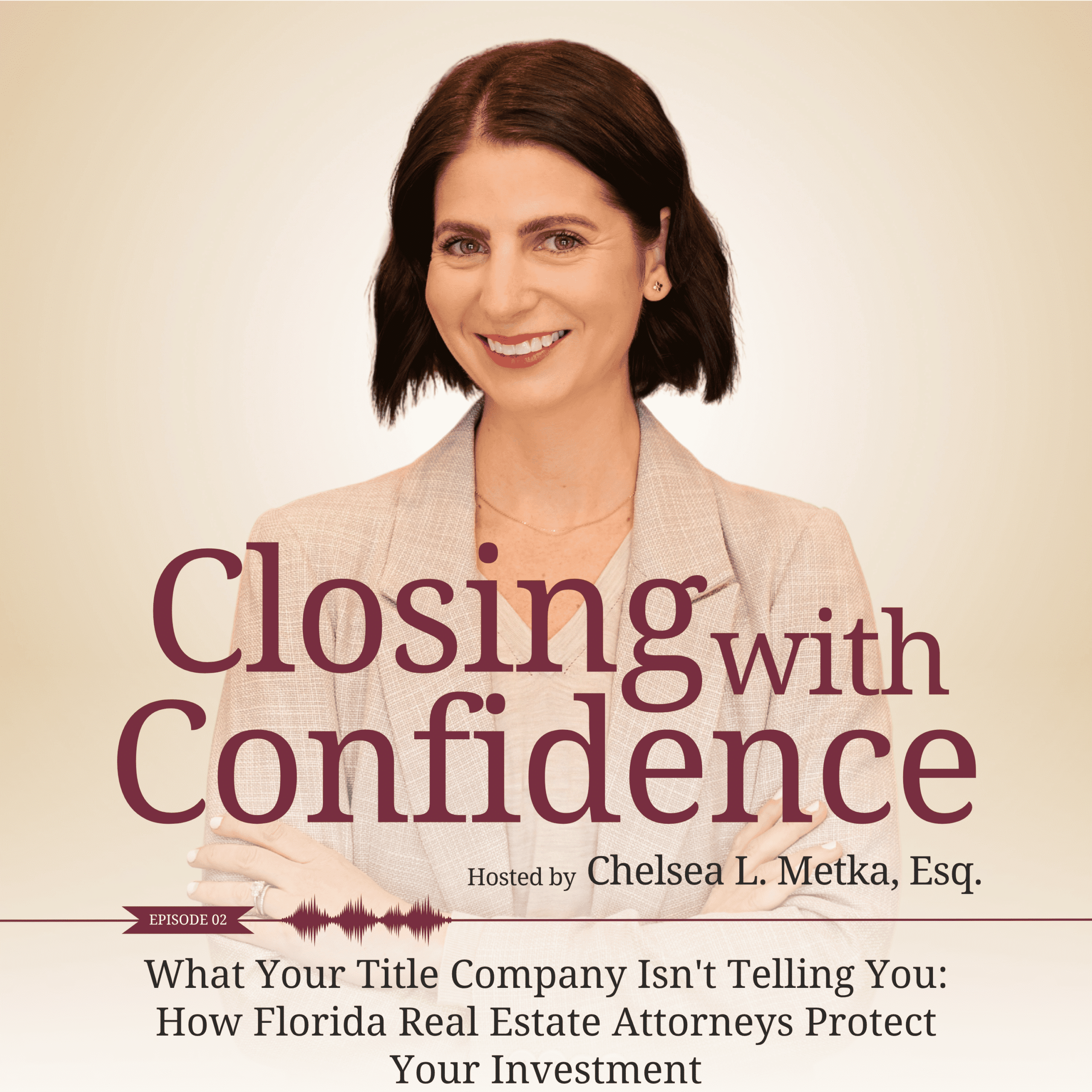
Florida is one of the few states where a real estate attorney is not required to close on a home. For many buyers, that fact is enough to justify skipping one altogether. But the absence of a legal requirement is not the same as the absence of legal risk — and in a state with one of the highest volumes of real estate transactions in the country, the stakes are rarely small.
Title Companies and Attorneys Are Not Doing the Same Job
From the outside, a title company and a real estate attorney can look nearly identical. Both are involved in moving a transaction from contract to closing. Both handle documents, deadlines, and disbursements. But the underlying function is fundamentally different.
Title companies typically divide their work across specialized roles — one person placing orders, another scheduling signings, another generating documents. What that structure can lack is someone looking at the transaction as a whole, someone trained to recognize how one seemingly minor detail can carry major legal consequences. A real estate attorney brings that holistic legal lens to every file.
What Is Schedule B-II and Why Does It Matter
One of the most overlooked documents in any closing is Schedule B-II of the title commitment. While most title companies focus exclusively on Schedule B-I — the checklist of items that need to be cleared before closing — Schedule B-II identifies all the matters that will remain as exceptions to the buyer’s title insurance policy after closing.
These are not technicalities. Easements, mineral rights, rights of access, and tenant rights can all appear on Schedule B-II, and depending on how a buyer intends to use the property, any one of them can have serious long-term consequences. Buyers who close without understanding what they are taking title subject to may find themselves with far fewer rights than they assumed.
Easements and Zoning Issues Do Not Always Announce Themselves
Some of the most expensive surprises in real estate are hiding in plain sight. Outdated easement agreements, some drafted decades ago, may technically grant access to a property without clearly defining maintenance responsibilities, permitted use, or liability. At first glance, the easement exists and the box gets checked. On closer read, the gaps in that language can make a buyer extremely vulnerable.
Zoning is another area where buyers can be caught off guard. A property that sits on a quiet residential street today may be adjacent to land zoned for the highest density of commercial and mixed-use development — a detail that rarely surfaces without deliberate legal due diligence.
Wire Fraud Is a Real and Growing Threat
Wire fraud in real estate transactions has become increasingly sophisticated. Buyers are targeted with fraudulent wire instructions, often at the most time-sensitive moments of a transaction. A law firm with strict verification protocols — requiring phone confirmation, multiple layers of internal review, and consistent client communication about what is and is not normal — adds a layer of protection that a standard title operation may not have in place.
The Cost of Legal Expertise Is Not the Cost of the Alternative
Hiring a real estate attorney in Florida is not a luxury reserved for complex commercial deals. For any buyer navigating a significant financial transaction, having someone in their corner who is trained to spot risk, evaluate legal exposure, and solve problems before they become permanent is not an added expense. It is the most straightforward form of protection available.
If you want to learn more about Closing with Confidence, check out https://metkalawfirm.com/what-your-title-company-isnt-telling-you-how-florida-real-estate-attorneys-protect-your-investment
