
Key Takeaways
- Florida’s homestead law requires both spouses to consent to the sale or mortgage of a primary residence, even when only one spouse is listed on the deed. This is not optional and cannot be worked around.
- Signing the mortgage and signing the promissory note are two completely different things. A spouse who joins the mortgage to acknowledge their homestead interest is not automatically becoming responsible for the loan.
- Spousal joinder applies to more than just purchases. Refinances, sales, and certain deed transfers all trigger the same requirement when homestead property is involved.
- Legal separation does not eliminate spousal homestead rights in Florida. Until a divorce is finalized, the requirement still applies.
- Title insurance companies require spousal joinder before they can issue a policy. This is not a lender preference; it is a legal and underwriting requirement.
The Question That Comes Up on Almost Every Florida Transaction
If you have ever been in the middle of a real estate transaction in Florida and heard someone ask, “Does the spouse have to sign?“, you are in good company. It is one of the most common questions that Chelsea Metka, a real estate attorney board certified in Real Estate Law by The Florida Bar and founder of The Metka Law Firm, PA, receives from loan officers, buyers, sellers, and real estate professionals throughout Winter Garden, Clermont, Horizon West, Windermere, Ocoee, and across West Orange County and South Lake County.
The challenge is that the answer is almost never as simple as checking whose name is on the deed or the loan. In Florida, spousal joinder is governed by homestead law, and homestead law does not follow the same logic most people expect.
To help break it down, Chelsea sat down with Eric Putt, branch manager with Waterstone Mortgage, who works with buyers and homeowners navigating real estate financing across Central Florida. Eric’s practical lending questions from the field are exactly what prompted this episode.
Why Florida Homestead Law Is at the Center of This
Chelsea: The biggest concept here is Florida homestead. Florida gives really special protections to a person’s homestead, and those protections extend to their spouse, even if that spouse isn’t on title.
Florida homestead law is sometimes described as “Florida’s Legal Chameleon” because it serves several different legal purposes simultaneously. For the purposes of this conversation, the relevant piece is the restriction on how a primary residence can be sold or mortgaged, which lawyers refer to as “alienation.”
The legal foundation is Article X, Section 4 of the Florida Constitution, which states in part: “The owner of homestead real estate, joined by the spouse if married, may alienate the homestead by mortgage, sale or gift.”
In plain terms: if a property qualifies as homestead, both spouses must consent to any sale or mortgage, regardless of whether both names appear on the deed. This is a strong public policy protection designed to prevent one spouse from selling or mortgaging the family home without the other’s knowledge, to protect the non-titled spouse’s interest in that home, and to preserve the family’s financial stability.
A Practical Example From the Closing Table
Chelsea uses a scenario that comes up regularly in her practice to illustrate how this works in a mortgage transaction.
Chelsea: Let’s say a husband is the only person on the deed of the marital home. Even if the wife isn’t on title, she will still have to sign the mortgage to acknowledge that her interest is subordinate to the loan. Without the spouse’s joinder, the non-signing spouse could claim that the mortgage is not enforceable against their homesteaded property.
Eric: And that’s where lenders start asking questions.
Chelsea: Exactly, because the lender wants to know that the mortgage they’re receiving is actually going to be enforceable against the property.
From the lender’s perspective, a mortgage on a homestead property that lacks the required spousal signature is not a secure loan. If the non-signing spouse later challenges the mortgage, the lender’s interest could be deemed subordinate to that spouse’s homestead rights, which effectively puts the lender in a vulnerable position. This is why Eric, and loan officers like him, pick up the phone and call a real estate attorney the moment a spousal joinder question surfaces.
Signing the Mortgage Is Not the Same as Signing the Note
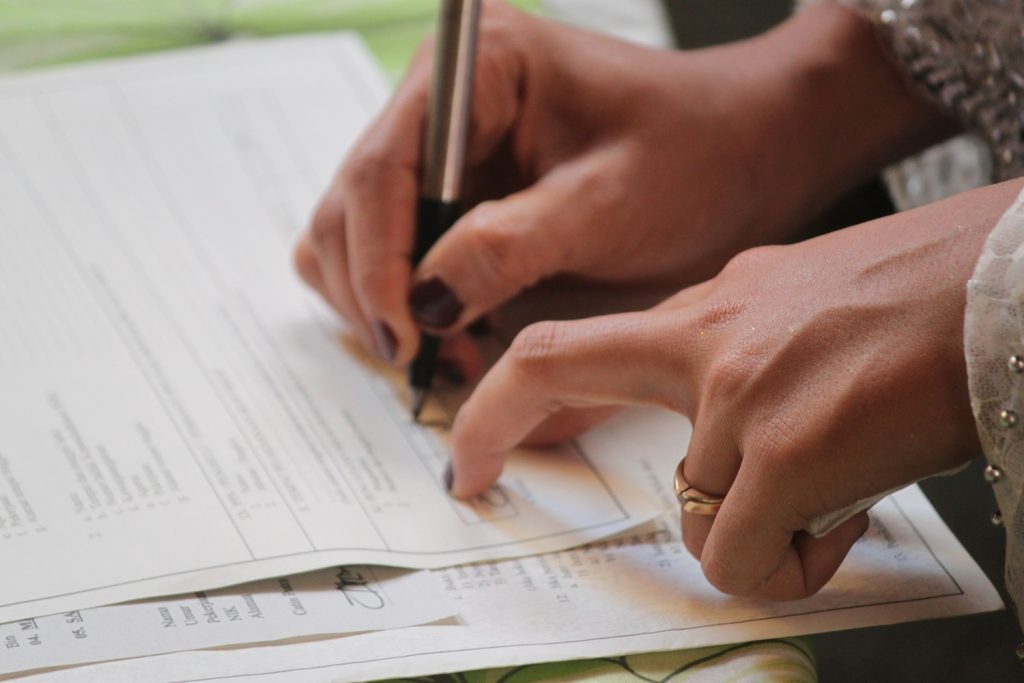
One of the most important and most consistently misunderstood points in spousal joinder situations is what the spouse is actually agreeing to when they sign.
Eric: So the question that I get a lot is, if the spouse joins the mortgage, does that mean the spouse is now responsible for the loan?
Chelsea: No, not necessarily, and that is a really important distinction.
Chelsea explains that there are two separate documents in a mortgage transaction that serve two entirely different purposes.
The promissory note is where the borrower formally promises to repay the debt. Signing the note creates personal liability for the loan. If your name is on the note and the loan goes into default, you are personally responsible for what is owed.
The mortgage is the security instrument that gives the lender a legal interest in the property as collateral for the debt. A non-titled spouse may be required to sign the mortgage to acknowledge that their homestead interest is subordinate to the lender’s claim, without necessarily becoming personally liable for the underlying debt itself.
Chelsea: The key document to look at is to make sure that the spouse who is joining isn’t also signing the promissory note.
Eric: So that doesn’t automatically mean, “Hey, congratulations, you now have a mortgage payment.”
Chelsea: Correct. Although I’m sure borrowers would prefer that explanation before they get to the closing table.
This is a distinction that has real financial consequences. Buyers and their spouses should understand it clearly before the signing appointment, not in the middle of it.
Spousal Joinder When Selling, Not Just When Borrowing
The spousal joinder requirement does not stop at mortgage transactions. It applies with equal force when a homestead property is being sold.
Chelsea: If you’re dealing with a Florida homestead, you can’t say, “Well, my spouse isn’t on the deed, so they don’t have anything to do with this transaction.” If it’s your primary residence, the homestead rights can require the spouse’s participation. And that’s why we don’t want the first conversation about this to happen five minutes before closing.
Eric: Which is when I call you.
Chelsea: Yes. All the time.
If a deed conveying a homesteaded property is executed without the required spousal signature, the conveyance can be challenged and potentially set aside. Title defects created by a missing spousal signature can surface years later when the new owner attempts to sell or refinance, creating complications that are difficult and expensive to resolve after the fact.
Title Insurance and Why Spousal Joinder Is Non-Negotiable
From a title insurance standpoint, spousal signatures are not discretionary. Florida title companies require spousal joinder before they will issue a policy. The reason is straightforward: without it, there is an open avenue for a future claim from a spouse who was not part of the transaction. No underwriter will accept that exposure.
There is also an important nuance worth understanding. A property does not have to be actively claiming the homestead tax exemption for the spousal joinder requirement to apply. A property that qualifies as a primary residence under Florida homestead law triggers the same spousal protections, even if the owner has not filed for the tax exemption. The legal test is whether the property functions as the owner’s primary residence, not whether a particular form has been submitted to the property appraiser.
Three Concepts That Are Not the Same Thing
Chelsea offers a framing that helps clarify why this question is so frequently misunderstood.
Chelsea: Being on title, being on the loan, and having homestead rights are three different concepts. Don’t assume that your answer is going to be based solely on whose name is on the deed. Often, it will depend on what type of property it is as well.
These three elements can exist in any combination:
- A spouse can be on the deed but not as a borrower on the loan
- A spouse can be on the loan but not on the deed
- A spouse can hold homestead rights without appearing on the deed or as a borrower on the loan at all
Each combination creates different obligations. Determining who needs to sign, and what they are signing, requires looking at all three independently.
Common Questions About Spousal Joinder in Florida
The following questions come up consistently in Chelsea’s practice and reflect the real scenarios homeowners, buyers, and lending professionals encounter.
Does a spouse have to sign if the couple is separated but not yet divorced?
Yes. Florida law does not recognize legal separation as a marital status that eliminates spousal homestead rights. Until a divorce is finalized, or until a court order specifically addresses homestead rights as part of the proceedings, the requirement remains in place.
What if the spouse lives out of state or does not live in the home?
Physical presence is not the determining factor. If the parties are legally married and the property qualifies as homestead, spousal consent is required regardless of where the spouse resides or whether they occupy the property.
Does this requirement apply to investment properties, vacation homes, or rentals?
Generally no. The spousal joinder requirement applies to property that qualifies as a primary homestead residence. Investment properties, vacation homes, and rental properties typically do not trigger this requirement unless they are determined to function as the owner’s primary residence.
Can a spouse waive their homestead rights in advance?
In very limited circumstances, homestead rights may be addressed through a prenuptial or postnuptial agreement, but these arrangements are closely scrutinized by Florida courts. A general or informal agreement is rarely sufficient. Anyone considering this approach needs qualified legal review before relying on any such waiver.
What happens if a deed or mortgage is signed without the required spousal joinder?
The transaction may be invalid or subject to challenge. A deed can potentially be set aside, and a mortgage may be deemed unenforceable against the non-signing spouse’s homestead interest. This creates serious title defects that can derail future sales, refinances, and estate transfers involving the property.
Does spousal joinder apply to same-sex marriages?
Yes. Florida homestead protections apply equally to all legally married spouses regardless of gender.
Is spousal joinder required on a refinance even if the spouse was not involved in the original loan?
Yes. If the property is homestead, the spouse must generally sign the refinancing documents even if they were not required to sign the original mortgage and are not on the title.
Can a power of attorney be used for the spousal signature?
In some cases, yes. However, the power of attorney must be properly drafted and executed, and it must be acceptable to both the lender and the title company. Many lenders have strict requirements around this and prefer direct signatures. This is an area where legal guidance in advance prevents problems at the closing table.
The Practical Takeaway for Everyone Involved
Whether you are a buyer, a seller, a homeowner refinancing, or a real estate or lending professional managing a transaction in Minneola, Oakland, Gotha, MetroWest, or West Orlando, the key points are the same.
Do not assume the answer based solely on whose name is on the deed. Do not assume it based solely on whose name is on the loan. The spousal joinder question depends on the type of property, the nature of the transaction, and the current legal status of the marriage.
Chelsea: Being on title, being on the loan, and having homestead rights are three different concepts. If you have questions about who needs to sign, give your friendly real estate attorney a call.
Surface this question at the beginning of a transaction, not in the final review before closing. A spousal joinder issue discovered at the closing table delays the transaction at best and can create a title defect that follows the property for years at worst.
Get the Right Guidance Before Anyone Signs
Florida’s homestead protections are among the strongest in the country, and they create real obligations in nearly every residential real estate transaction involving a married homeowner. Whether you are buying, selling, refinancing, or transferring a deed, knowing who needs to sign and what they are signing is not a detail to figure out at the last minute.
Chelsea Metka and The Metka Law Firm, PA work with buyers, sellers, lenders, and real estate professionals across Winter Garden, Clermont, Horizon West, Windermere, Ocoee, Minneola, Oakland, Gotha, MetroWest, and West Orlando to make sure every transaction is handled correctly from the start.
Have a spousal joinder question before your next closing? Reach out to The Metka Law Firm, PA today.
Call (407) 826-1952 or schedule a consultation at metkalawfirm.com/contact-us